


Best Hockey Sticks For Beginners

You're probably reading this blog because you have no idea what hockey stick to buy for yourself or one of your children. Don't panic — we've got you sorted at ONE Sports Warehouse.
Choosing your first field hockey stick can be daunting. Perhaps you've never played before, or it's your child's first go at a club. This guide will help you pick your perfect stick.
What is the average cost of a beginner stick?
The average cost varies for three reasons:
- Is it a senior or junior stick? Senior sticks are usually longer and slightly more expensive to manufacture.
- Which brand is it? Some premium brands charge a little more for their entry-level sticks.
- What is it made of? Wood = cheapest, fibreglass = middle, carbon = more expensive.
Most beginner hockey sticks start around £25 for juniors and £40 for seniors. A rough guide:
Junior hockey sticks - £25+
Senior hockey sticks - £40+
What bow should a beginner choose?
Bow choice matters, especially for beginners. Here's what to know:
- As a beginner, stick to a mid bow or standard bow. These keep the ball on the ground naturally and are more forgiving when hitting.
- Avoid low bows and ultra low bows as a beginner — these are designed for players with advanced drag-flicking and 3D skills. In the wrong hands they can cause you to lift the ball unintentionally.
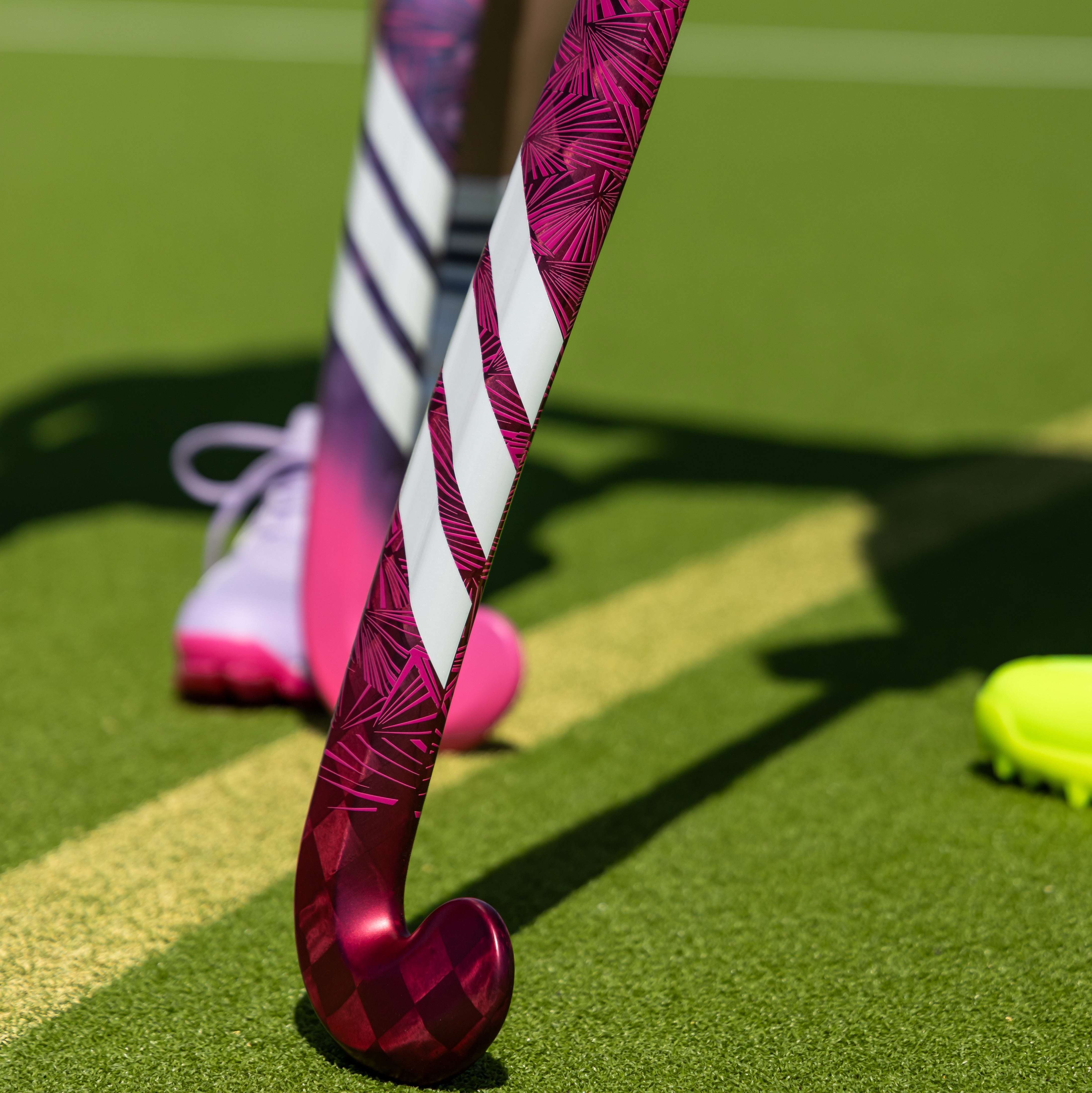
- The Y1 ADB is the most accessible option in the Y1 Cosmic 2026/27 range for beginner and intermediate players — it's an Advanced Dribble Bow, designed for all-round control. Shop the Y1 ADB range.
For a full breakdown of all bow types, read our hockey stick bow guide.
What material is best for a beginner hockey stick?
A true beginner stick in its basic form is made of wood. Whilst this was the traditional way, a lot has changed — many beginner sticks now include fibreglass and even a small amount of carbon.
A wooden stick may save money initially, but the lifespan is often shorter and players find them heavier and more unforgiving. Our honest advice: if you can afford not to go for a wooden stick, don't — especially for adult beginners.
How to choose a child's first hockey stick
Age
A wooden stick is appropriate for a young 6-year-old but may not be enough for the power a 12–13 year old generates. At that age, moving into fibreglass or composite is advisable.
Budget
More expensive doesn't always mean better for beginners. A high-carbon stick may actually be too stiff for a younger player. Come in store if you can to try options in person.
Stick size guide
Height (ft) |
Length of stick (inches) |
Shop by Size |
-3' |
24" |
|
3' – 3' 5" |
26" |
|
3' 6" – 3' 10" |
28" |
|
3' 10" – 4' 1" |
30" |
|
4' 1" – 4' 5" |
32" |
|
4' 6" – 5' 0" |
34" |
|
5' 0" – 5' 4" |
35" |
|
5' 4" – 6' 0" |
36.5" |
|
6' 0" + |
37.5" |
Recommended beginner junior hockey sticks
Here are some brilliant beginner junior hockey sticks across different budgets. We recommend checking current availability as ranges update each season:
Recommended beginner senior hockey sticks
For adult beginners, here are some great options in the current 2026/27 ranges:
- Y1 ADB 2026/27 — the safest all-round control option in the Y1 Cosmic range. Perfect for beginners and intermediates building their game.
- Grays entry-level range — reliable, well-priced and widely used at club level.
- adidas entry-level range — the Youngstar and lower Fabela models are great first senior sticks.
- Browse our full range of senior hockey sticks and all hockey sticks.
Ready to buy? Shop the full range now.
Still not sure? You can email us, call us or speak to us on live chat. You can also read our blog on how to choose the right hockey stick.
For a full breakdown of what kit you will need as a beginner hockey player, have a look at the video below.