



Hockey Stick Carbon Percentage Explained: How Much Do You Need?
90% carbon, X.2, .95, Pro Bow 85... Shopping for a hockey stick can feel a bit like a maths test, and carbon percentage is the number we get asked about more than any other.
In a nutshell: more carbon makes a stick stiffer, and a stiffer stick hits harder but is less forgiving. Most club players are best somewhere in the middle, and the biggest number on the rack is very rarely the right one.
What does carbon actually do in a hockey stick?
Carbon fibre makes a stick stiffer. A stiff stick bends less when it strikes the ball, so more of your swing ends up as ball speed. That's why high-carbon sticks hit and slap so hard.
The trade-off is forgiveness. A stiff stick cushions the ball less when you receive it, so a hard pass is more likely to bounce off, and you'll feel more sting in your hands when you mistime a hit. The rest of a stick is usually fibreglass, often with some aramid, bonded together with resin, and that's what adds flex and feel. Our guide to what field hockey sticks are made from goes into the materials in more detail.
So how much carbon do you need?
As a rough guide:
- Young juniors and complete beginners: wood, fibreglass or a low-carbon stick.
- Developing and regular club players: roughly 20% to 50%.
- Experienced club players who hit and slap a lot: roughly 50% to 80%.
- High-level players with clean technique: 80% and above.
That's a starting point, not a rule. If you're torn between two levels, we'd normally suggest the lower one. Most players gain more from a better first touch than from a bit of extra power.
Why isn't the percentage the whole story?

The percentage tells you how much carbon is in the stick. It doesn't tell you what quality of carbon has been used, how it's been laid up or how the rest of the stick is built, and those things change the feel a lot.
TK's P5 Control Bow is a good example. It's only 20% carbon, but TK use NPR reinforcement to make it more responsive than that number suggests. Y1 do something similar at the top of their range, adding a Swedish X Carbon Jacket to their X.2 and X models. Two sticks with the same number on the shaft can feel very different, which is exactly why we always say try before you buy if you can.
How does each brand label carbon?

This is where it gets confusing, because every brand does it differently:
- TK state the carbon on each model. The P8 is glassfibre, the P7 is 5% carbon, the P5 20%, the P3 50%, the U2 80% and the P1 90%, with the Ultra DF and Deluxe at 95%.
- Y1 use a ladder: 30, 50 and 70 are the carbon percentage, X.2 is 80% plus the Swedish X Carbon Jacket, and X is 95%. So the Y1 ADB X.2 is 80% carbon.
- Kookaburra numbers track the carbon too: the LB10 and MB10 are 10%, the LB20 20%, the MB30 30%, the LB50 and MB50 50% and the Pro Elite 98 is 98% carbon.
- Osaka use the number to show the carbon level, usually 25, 40, 70 and 85, with LTD models above that. A Pro Bow 40 is Osaka's 40 carbon level, and so on.
- adidas use a power rating rather than a carbon percentage (more on that below).
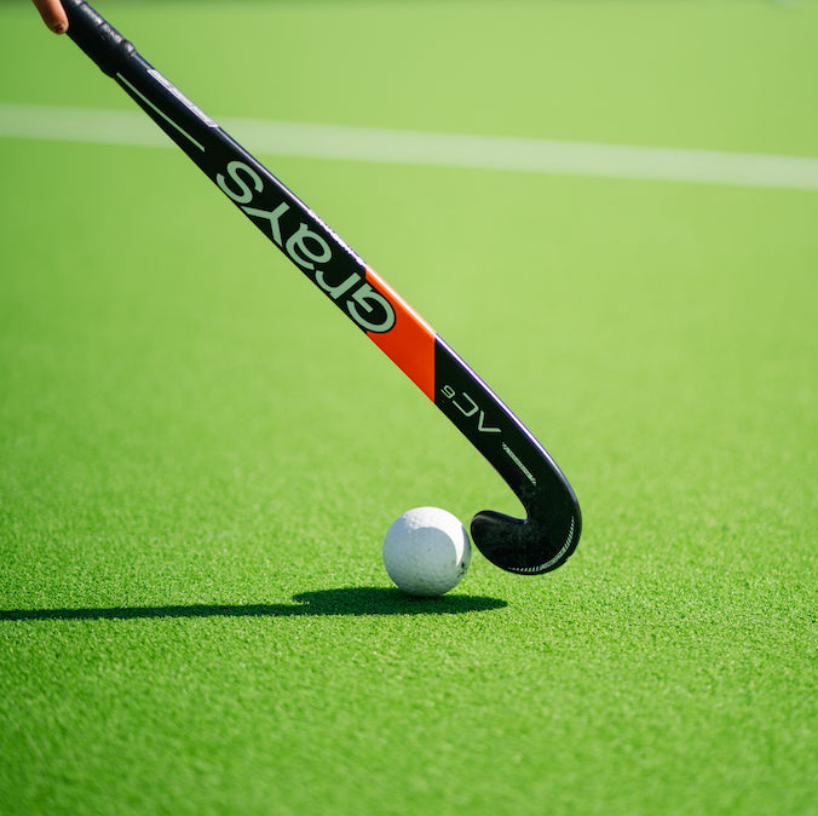
- Grays use a number within each family, such as DB 7+, 9+ and 10+, where a higher number means a more powerful stick. They don't lead with a carbon percentage.
- Nike use tiers: Rise (low carbon), LT (mid carbon), Select (high carbon) and Elite (max carbon).
Is an adidas .95 the same as 95% carbon?

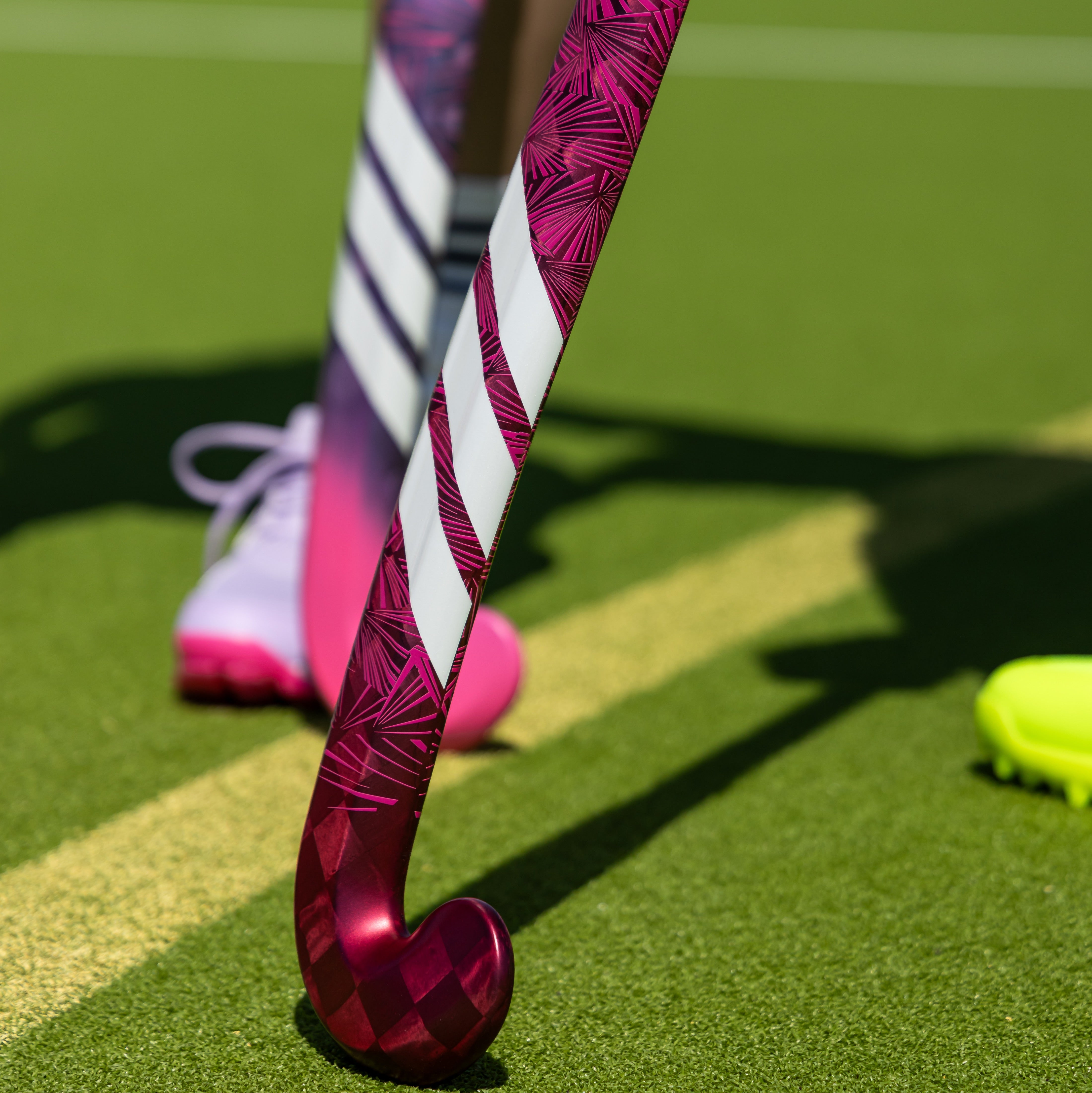
No! The adidas number is a power rating that shows where a stick sits in the adidas range. Senior sticks run from .60 to .95 and the higher the number, the more power and stiffness, so a Fabela .85 sits one step below the top .90 and .95 models. Just don't compare an adidas .60 directly with a Y1 50 or an Osaka 40, as they're measuring different things.
And if you've had adidas sticks before, beware: the old system ran the other way round, with the lowest numbers at the top of the range.
How do you pick the right level for you?
Start with the level you play at now, not the level you'd like to reach. Then think about how you play:
- If you hit and slap a lot, move up the scale.
- If first touch and close control are your strengths, stay in the middle.
- If you're a junior or coming back after a break, go lower.
- If you get sore hands or wrists, a stiffer stick is very unlikely to help.
Does more carbon make a stick last longer?
Not by itself. A well-made composite stick will generally outlast a wooden one, as we explain in how long field hockey sticks last, but a very stiff stick can still be damaged by heavy stick-on-stick contact or a mistimed hit on the edge (especially if you're a bit of a chopper in the tackle). How often you play, the surface and how you look after your stick matter just as much.
What about juniors?
Juniors really don't need high-carbon sticks. A stick that's too stiff makes receiving and learning technique harder, and younger players rarely swing fast enough to get the benefit. Wood and fibreglass are perfectly sensible to start with, adding carbon gradually as they grow. Have a look at our junior hockey sticks.
Still not sure?
Carbon is only one part of the picture, so it's worth reading our guide to which hockey stick brand is best, or our picks of the best hockey sticks under £50, £100 and £150 if budget is the deciding factor. Or just give us a call on 0191 447 4744, drop us a message on live chat or pop into the shop and have a feel of a few different levels. Ready to buy? Shop senior hockey sticks.