


Which Hockey Stick Brand Is Best? Y1 vs Grays vs adidas vs Osaka vs TK
It's one of the questions we get asked most, in the shop and on live chat: which hockey stick brand is actually the best?
In short, there isn't one. Every brand we stock makes brilliant sticks, and every brand makes sticks that would be completely wrong for some players. What really differs is how each brand builds, names and prices its range. Once you understand that, choosing gets a lot easier.
Which brands do our customers actually buy?
For what it's worth, Y1 is by some distance our biggest-selling stick brand. Over the last 12 months roughly six in every ten senior sticks we sold were Y1, followed by Osaka, Grays and adidas. That tells you what's popular rather than what's right for you, but it's a useful place to start.
Y1: brilliant if you know the shape you want

Y1 build everything around the bow. The 2026/27 Cosmic range has the all-round ADB (Advanced Dribble Bow), the MR, the GLB and GGLB, the LB, and the specialist YLB and BB. Most shapes then come in a ladder of carbon levels: 30, 50, 70, X.2 and X, with the X at 95% carbon.
The LB and the GLB/GGLB have been our two most popular Y1 shapes over the past year. The LB is a proper low bow (24.5mm deep, peaking 200mm from the head) for drag flicking, aerials and 3D skills, while the GLB/GGLB uses a gradual low bow with a flatter face, so it's a bit kinder on your trapping and hitting. Have a look at the Y1 LB X if you're a flicker, browse all Y1 hockey sticks, or read our Y1 2026/27 Cosmic range guide for the full breakdown.
Osaka: the easiest range to read

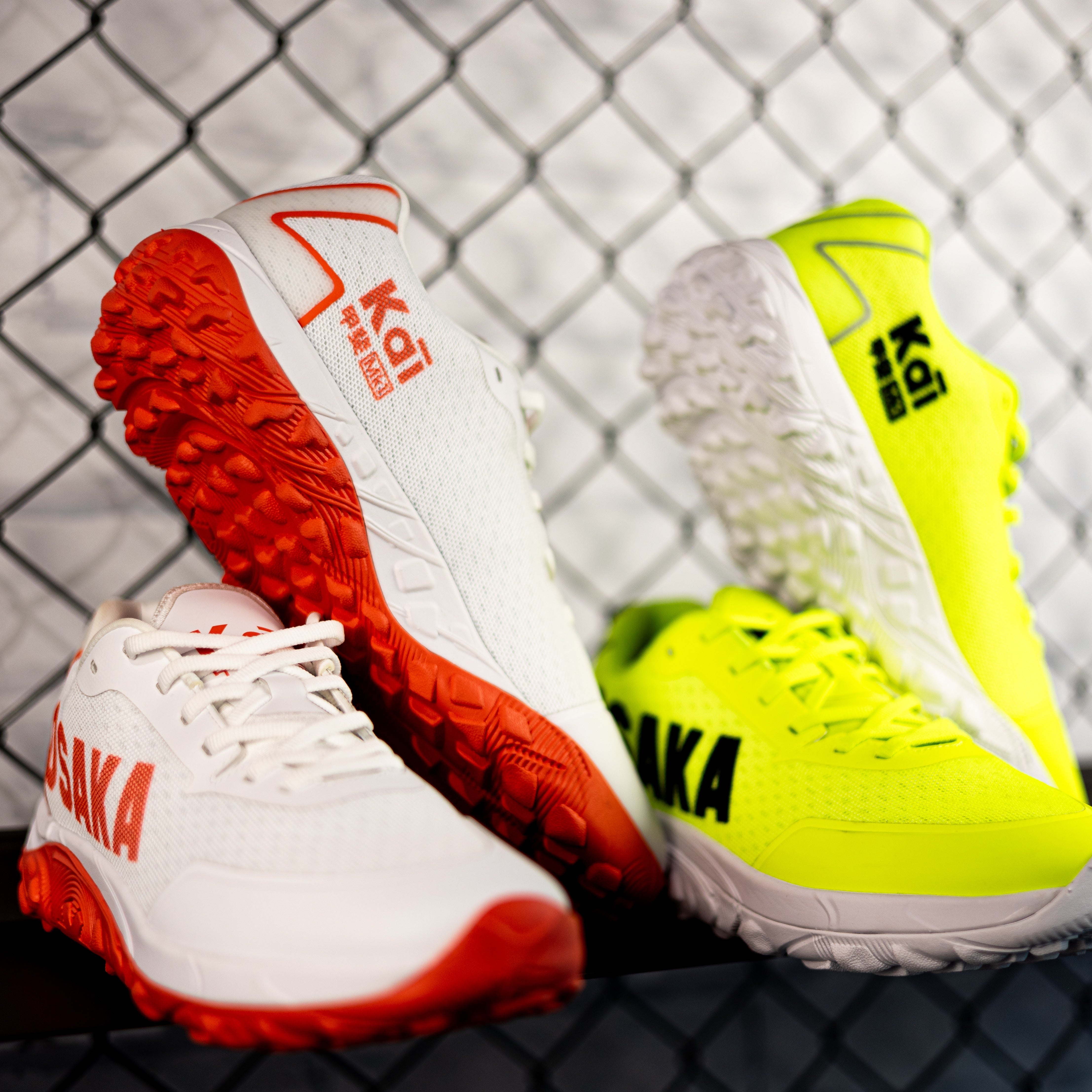
Osaka name their sticks after the bow and the carbon level, so you know roughly what you're getting before you even pick one up. There are four shapes: the Mid Bow (bow peak at 300mm) for a traditional feel, the Pro Bow (250mm) for 3D control, the Low Bow Advanced (200mm) for more lift, and the very aggressive Proto Bow for specialists. Each then comes in levels from 25 up to 85, with Ltd models at the very top.
The Osaka Low Bow Advanced 40 is a nice middle ground if you want a bit more lift without going fully specialist. Our Osaka range guide goes through every shape, or browse all Osaka hockey sticks.
Grays: something at every price

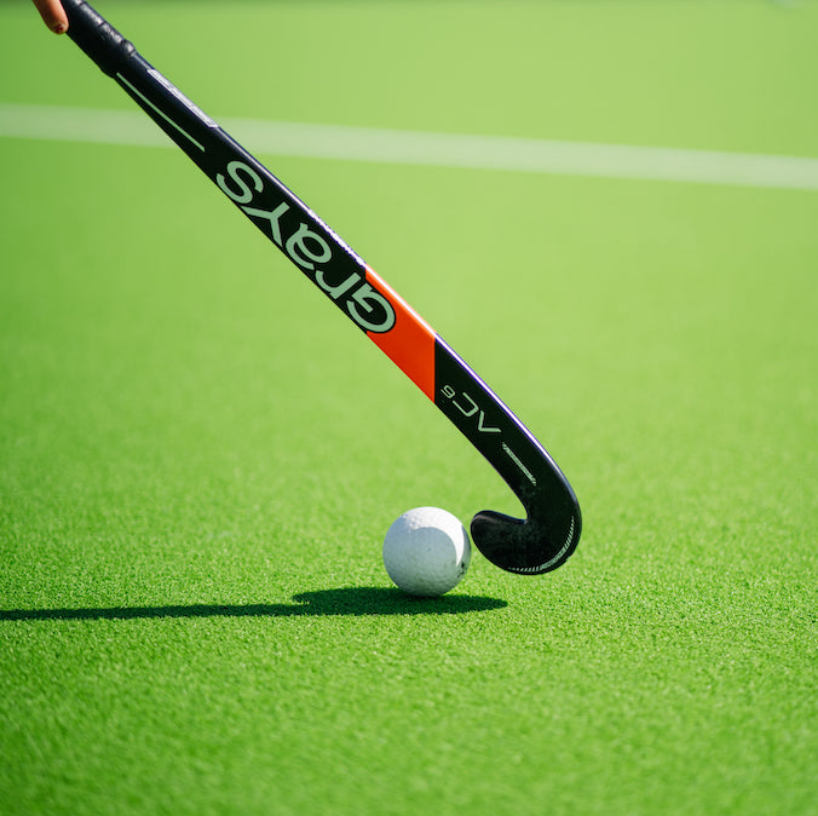
Grays have one of the widest ranges we sell, from wooden junior sticks right up to the flagship JB 12+. The headline senior families for 2026/27 are Jumbow+ (JB+) for drag flicking and aerials, Probow+ (PB+) for very technical 3D players, Dynabow+ (DB+) for all-round play, and the GT range, which Grays describe as their most traditional profile. If you just want a good all-rounder, the DB family is a sensible place to start. Browse all Grays hockey sticks.
adidas: pick a family, then a number

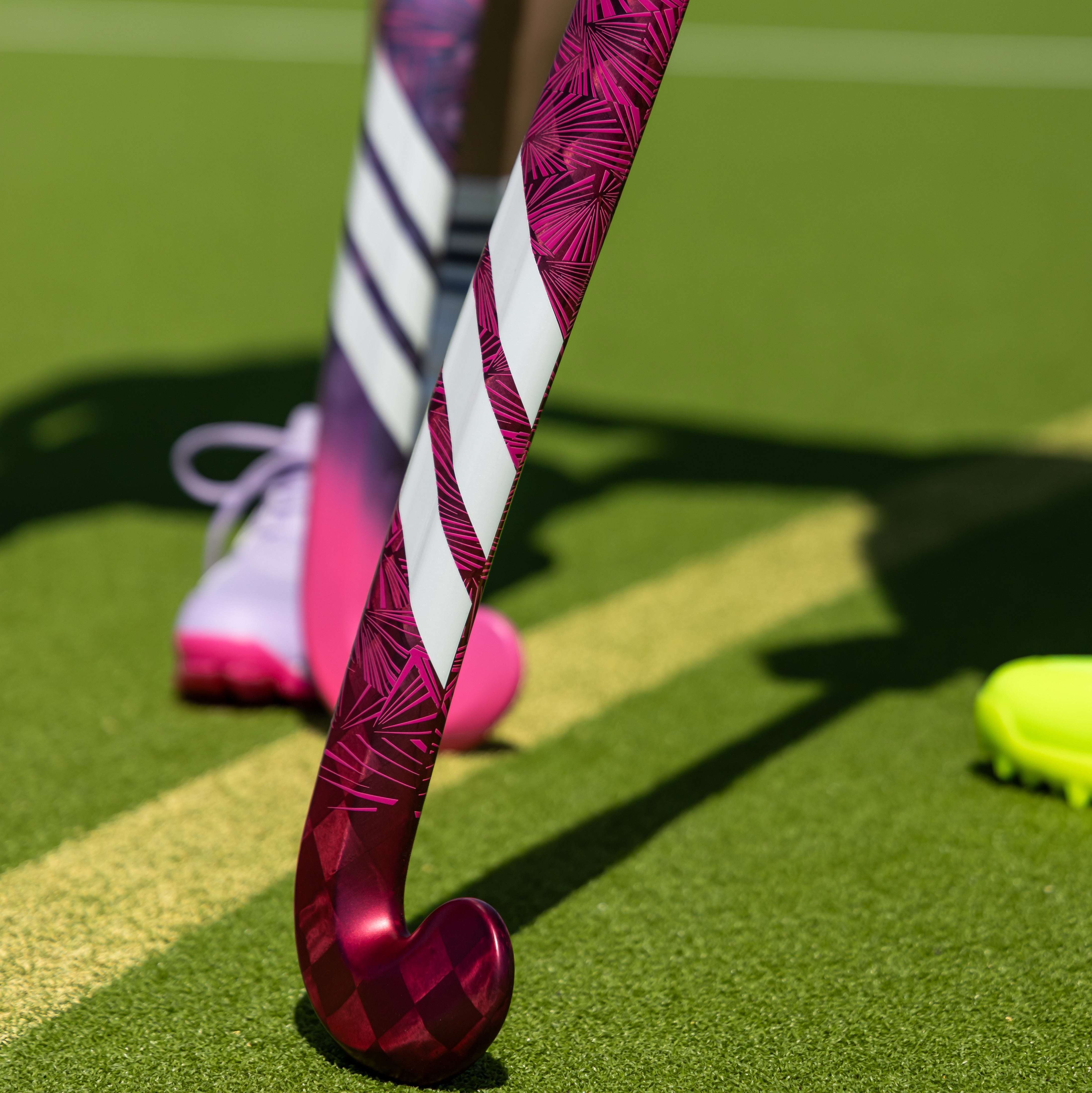
adidas split their sticks into playing-style families. The Estro (and the women-focused Fabela) use a mid-low bow for control and all-round play. The Ruzo pairs a low bow with adidas' 3D head. The Chaosfury (and the women-focused Ina) are the ultra-low bow sticks for flicking, aerials and 3D skills.
The number on an adidas stick is a power rating, not a carbon percentage. Senior sticks run from .60 to .95, and the higher the number the more power and stiffness. If you're coming from an older adidas stick, watch out: the old system ran the other way, with the lowest numbers at the top! The adidas Estro .75 is a nicely balanced option, and our adidas 2026/27 guide explains the whole range. Browse all adidas hockey sticks.
TK: the carbon is on the label

TK are refreshingly straightforward. They publish the carbon content of each stick and keep the bow choice simple: Control Bow for all-round play, Late Bow for quicker aerials and eliminations, and an Xtreme Late Bow on the P3, plus the drag-flick-specific Ultra DF. The Performance range runs from the P8 up to the 90% carbon P1, with the Ultra range and the Deluxe above it. The TK P1 Control Bow is a great all-rounder for good club players. Browse all TK hockey sticks.
Nike: three shapes, four tiers
Nike are newer to hockey, but their stick range is very easy to follow. There are three shapes, the mid bow Pursuit, the low bow Shadow and the ultra-low bow Laser, and each steps up through tiers: Rise, LT, Select and Elite. Our Nike range guide has more, or browse Nike hockey sticks.
Kookaburra and Mercian: good value
Kookaburra's LB (low bow) and MB (mid bow) sticks are some of the most affordable composite sticks we stock, and the range goes all the way up to the Pro Elite 98. The LB20 is a good first carbon stick. Browse Kookaburra hockey sticks.
Mercian split their sticks into Genesis (entry level) and Evolution (the performance range), and there's some good value in the Mercian sticks we have in at the moment.
So how should you choose?
We'd always suggest doing it in this order:
- Bow first. It changes how a stick plays more than anything else. Our hockey stick bow guide explains the options.
- Then carbon (or power rating). Be honest about your level. A stick that's too stiff for you will cost you first touch.
- Then budget. Most club players don't need a flagship stick.
- Then brand. Once the shape and level are right, feel, weight, grip and (let's be honest) looks can decide it.
Does the brand matter for juniors?
Less than you'd think. Most of the brands above make junior sticks, and at that age the right length and a forgiving stick matter far more than the name on the shaft. Browse our junior hockey sticks.
Still can't decide?
The best way to compare brands is to pick a few up. Pop into the shop in Durham, give us a call on 0191 447 4744 or drop us a message on live chat and we'll help you narrow it down.
Ready to have a look? Shop all hockey sticks.