


When Should A Junior Move Up To A Senior Hockey Stick?
"When is my child ready for an adult hockey stick?" It's one of the questions parents ask us most. The honest answer is that it's less about a particular birthday and more about height, strength and how much hockey they're playing.
The quick version: they're ready for a senior stick once they've outgrown a 35" junior stick, and their first senior stick should be a forgiving, low to mid carbon one, not the stiffest thing on the rack.
Step 1: check the size
Height is the best place to start. Our rule of thumb for juniors is simple: measure from the floor to their belly button in inches, and that's roughly the stick length they need. Junior sticks run up to 35", and once a player needs more than that, they're into senior sizes (36.5" or 37.5").
Our stick size guide has the full table by height. If they're between junior sizes, go up one, but no more. A stick that's too long makes it much harder to get low and control the ball.
Step 2: think about strength and level
Height doesn't tell the whole story. Other signs a junior might be ready to step up include:
- They play most weeks, often for a school, club or county team.
- Their current stick feels light or whippy when they hit.
- They're starting to slap the ball, lift it or try drag flicks.
- They're training or playing with adult teams.
Step 3: don't jump straight to high carbon
This is the most common mistake we see. A player moving up from a junior stick doesn't need a 90% carbon stick. Lots of carbon makes receiving harder and gives very little benefit until a player is swinging fast enough to use it. A low to mid carbon senior stick is the right first step, and our guide to hockey stick carbon percentages explains why.
What about strong juniors who aren't tall enough yet?

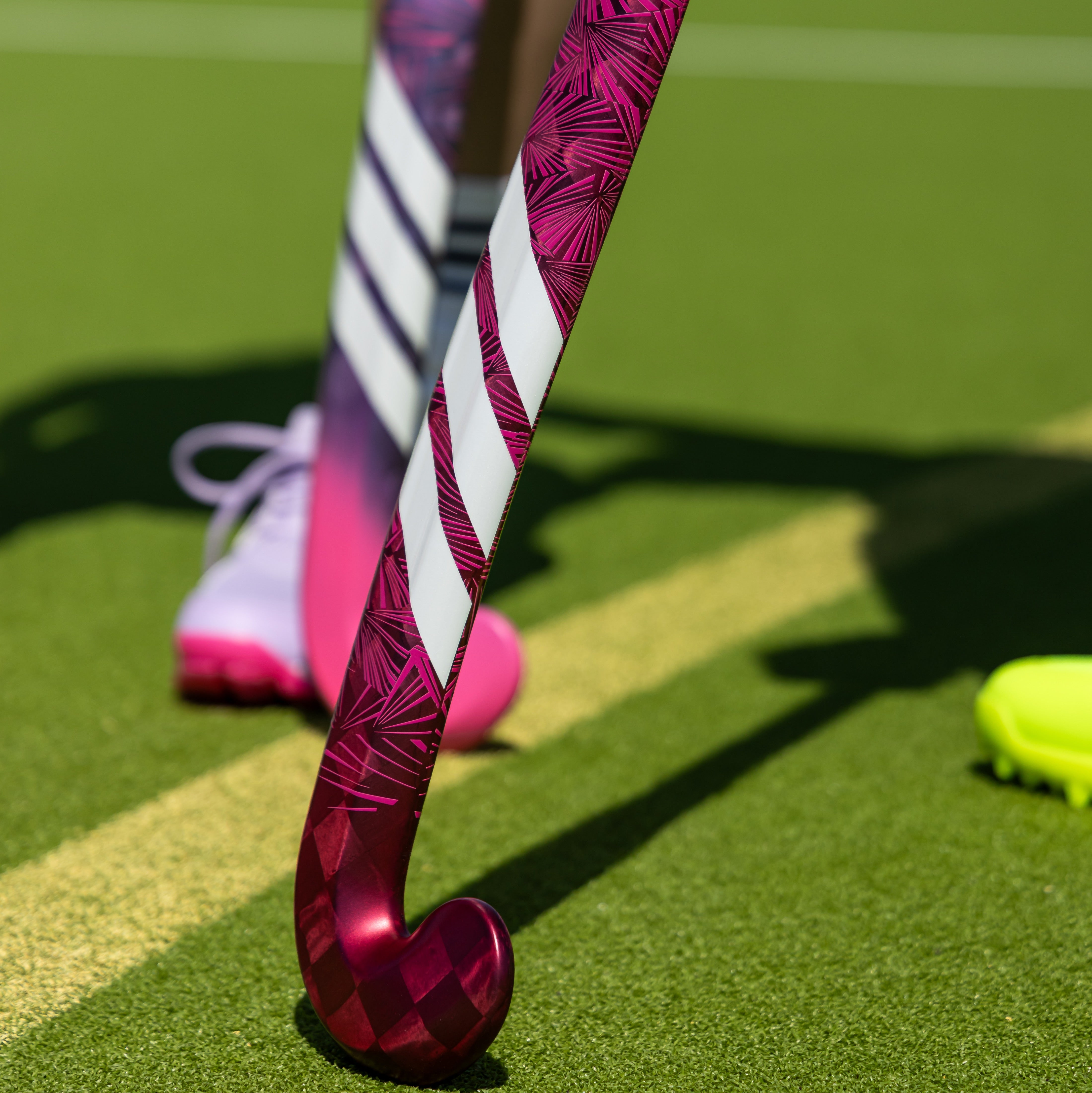
Several brands make performance sticks in junior lengths, which is a great middle step. The adidas Estro .40 and Fabela .30 are junior sticks with a bit more power, and the Grays GT 5 Junior and PB 7+ Junior bring Grays' senior shapes to junior lengths. Our guide to the best junior hockey sticks has more options.
Good first senior sticks for 2026/27

- Y1 ADB 30: the most forgiving stick in Y1's Advanced Dribble Bow range, with 30% carbon and the same all-round shape as the top models.
- TK P5 Control Bow: 20% carbon in a light, comfortable build, and TK's Control Bow suits first touch and all-round play.
- Kookaburra MB30: a 30% carbon mid bow with Skill Zone face shaping for close control, at a very fair price.
- Osaka Mid Bow 25: Osaka designed it for young and intermediate players, with a forgiving flex at their 25 carbon level.
- Grays GT 5: a mid-range low bow if they're already working on lifts and 3D skills.
For more options at different budgets, see our picks of the best hockey sticks under £50, £100 and £150.
Junior to senior stick FAQs
What age do players move to a senior hockey stick?
Often somewhere around 12 to 14, but height matters far more than age. Some tall younger players move up earlier, and some older juniors are better off in a junior length for a bit longer.
Can I cut down a senior stick for my child?
We wouldn't. Cutting a stick changes its balance and weight, and you'll be cutting off the handle end too.
Should my child use the same stick as their coach?
Not necessarily. A coach's stick will usually be longer and stiffer than a junior needs. Choose a stick that suits your child's size and level (however much they'd like to copy the coach).
Still not sure?
Bring them into the shop to try a few lengths, give us a call on 0191 447 4744 or drop us a message on live chat. Ready to buy? Browse our junior hockey sticks or senior hockey sticks.