





How Heavy Should Your Field Hockey Stick Be?

What you'll learn:
-
The five hockey stick weight categories and what the grams actually mean
-
How balance point changes the way a stick feels (even at the same weight)
-
Which weight suits your position — from defenders to drag flickers
-
Common mistakes we see players make when choosing stick weight
Time needed: 12 minutes | Difficulty: Beginner-friendly
You’ve found the stick you want. Right bow, right brand, right price. Then you spot the weight options and suddenly you’re second-guessing everything.
Sound familiar?
Hockey stick weight is one of those things that gets overlooked until you’re mid-match, wondering why your tackles feel weak or your skills feel sluggish. The number on the spec sheet matters — but probably not in the way you think.
We’re going to break down exactly what hockey stick weight means, how it affects your game, and how to figure out what’s right for you. No jargon-heavy waffle. Just honest advice from a team that’s been fitting players with sticks for years.
What Does Hockey Stick Weight Actually Mean?
Let’s start with the basics. Hockey stick weight is measured in grams and refers to the total mass of the stick from handle to head. Most adult field hockey sticks weigh somewhere between 520g and 660g, though the majority of players end up using something in the 540g to 620g range.
The FIH (International Hockey Federation) sets a maximum weight limit of 737g — but you’d struggle to find anything that heavy on the shelf these days. The market has shifted firmly toward lighter sticks over the past decade, thanks to advances in carbon fibre and composite manufacturing.
Here’s a rough breakdown of the weight categories you’ll see:
|
Category |
Weight Range |
|
Super Light |
500-525g |
|
Light |
525–560g |
|
Medium |
565–590g |
|
Heavy |
595–620g |
|
Super Heavy |
625–660g |
Worth noting: not every brand uses the same labels. One manufacturer’s “light” might be another’s “medium.” Always check the actual gram weight rather than relying on the name alone.
Why Hockey Stick Weight Matters More Than You’d Think
Pick up two sticks that weigh 530g and 590g respectively. That’s only a 60g difference — roughly the weight of a single hockey ball. Doesn’t sound like much, does it?
But over the course of 70 minutes of running, tackling, dribbling, and hitting, those extra grams add up. Your stick is essentially an extension of your arms, and even small differences in weight change how it feels in your hands, how quickly you can move it, and how much power sits behind your hits.
A few things shift as weight changes — some obvious, some less so.
Hand speed is the big one. Lighter sticks move faster through the air. If you rely on quick skills, 3D lifts, or rapid changes of direction with the ball, a lighter stick gives you that extra snap. It’s the reason most forwards gravitate toward the lighter end.
Then there’s hitting power. Physics is physics — more mass behind a hit means more force into the ball. That’s why you’ll see some defenders and drag flickers opt for sticks at the heavier end.
Tackling strength is related. A heavier stick is harder for an opponent to knock aside during a block tackle. If you’re a defender who plants their stick and lets the attacker run into it, that extra weight works in your favour.
The one people forget? Fatigue. A heavier stick tires your wrists and forearms faster, especially in the second half. If you’re already struggling with fitness or playing long minutes, going lighter can genuinely help. We’ve had players shave 30-40g off their stick weight and notice a real difference in the last quarter.
And there’s a subtler point about ball reception — heavier sticks can actually make trapping easier for some players, because the extra mass dampens the ball’s energy on contact. Not everyone notices this. But if you’ve ever wondered why your traps feel crisper on one stick than another, weight might be part of the answer.
The Balance Point: The Thing Most Players Ignore
Here’s where it gets interesting. Two sticks can weigh exactly the same on a scale but feel completely different in your hands. The reason? Balance point.
The balance point is where the stick’s weight is distributed along its length. It’s measured in millimetres from the head of the stick to the point where it balances on a fulcrum (like balancing a ruler on your finger).
400mm = neutral. Weight is evenly distributed across the stick.
Below 400mm = head heavy. More weight sits toward the head and toe of the stick.
Above 400mm = handle heavy. More weight sits up near your hands.
This matters more than most players realise.
A head-heavy stick (low balance point) feels like there’s weight behind the ball when you hit or tackle. It’s brilliant for defenders and players who rely on powerful hits, slaps, and solid block tackles. The trade-off is that it can feel sluggish when you’re trying to do quick stick work or lift the ball.
A handle-heavy stick (high balance point) feels lighter and quicker in the hands, even if the total weight is the same. It’s better suited to forwards and skilful players who do a lot of dribbling, push passing, and overhead skills. The downside is less “oomph” behind your tackles and hits.
So when you’re comparing sticks, don’t just look at the gram weight on the spec sheet. Pick them up. Swing them. You might prefer a 570g stick with a high balance point over a 540g stick that’s head heavy — because it genuinely feels lighter and faster in your hands.
What Hockey Stick Weight Should You Choose by Position?
Your position on the pitch gives you a solid starting point, though it’s not the whole story.
Defenders
Defenders tend to favour sticks in the medium to heavy range (565–620g). You’re making big clearances, channelling attackers, and throwing your stick into block tackles all game. That extra weight helps.
A lot of centre-backs we fit at our Durham shop go for something around 580–600g with a low balance point. It gives them that satisfying thud on a hit and makes their tackles feel rock-solid. Pair that with the right stick bow and you’ve got a proper defensive setup.
That said, modern defenders need to be comfortable on the ball too. If you’re a ball-playing centre-back who distributes from the back, you might lean toward the lighter end of medium.
Midfielders
Midfielders are the Swiss Army knives of hockey, so a medium weight (565–590g) tends to work well. (If you’re after stick recommendations for midfield specifically, check out our guide to the best sticks for midfielders.) You need enough weight to tackle and hit effectively, but enough speed in the stick for the close skill work and quick passing that midfield demands.
If you’re not sure where to start, medium is almost always a safe bet for a midfielder. It’s the all-rounder weight for the all-rounder position. We’ve seen plenty of midfielders try a super light stick and come back within a month because their tackling suffered — the weight just wasn’t there when they needed it.
Forwards and Attackers
Forwards typically go lighter — somewhere in the 520–560g range. You’re carrying the ball at speed, beating defenders with skill, and you need your stick to keep up with your hands.
A lighter stick won’t hit as hard, but that’s rarely a forward’s primary concern. You’re looking for rapid ball movement, quick deflections, and the ability to get the ball airborne in tight spaces. Light and super light sticks deliver that.
Goalkeepers
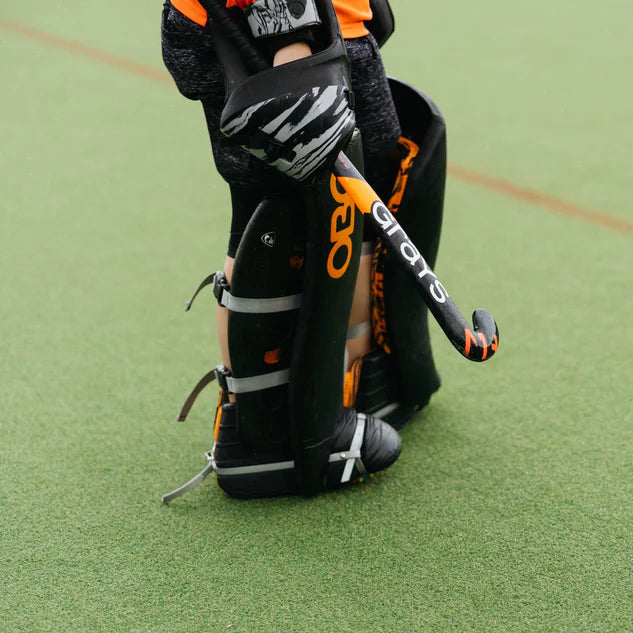
Goalkeeper sticks? Completely different conversation. They’re typically heavier (often 600g+) with a thicker profile built for clearing, and the weight distribution is designed around blocking and kicking rather than dribbling. If you’re a keeper, weight is less about personal preference and more about what the position demands of you.
Does Carbon Content Affect Weight?
Short answer: yes, massively. The carbon percentage in your stick is one of the biggest factors in how much it weighs.
Higher carbon content (70-100%) produces stiffer, lighter sticks. These are typically aimed at intermediate to advanced players. The stiffness gives excellent power transfer — energy from your swing goes directly into the ball rather than being absorbed by the stick. But stiffer sticks can be less forgiving, especially for newer players still developing their technique.
Lower carbon content (below 50%) means the stick uses more fibreglass, aramid, or other composites. These sticks tend to be a bit heavier, with more flex and a softer feel on the ball. They’re more forgiving for beginners and can actually help with ball control because the stick absorbs more of the impact.
Here’s the thing though — carbon percentage alone doesn’t determine weight. Stick construction, the type of resin used, the mould, and even the grip all play a part. We stock sticks from Y1, adidas, Grays, Osaka, TK, Kookaburra, Mercian and Nike, and we can tell you from experience that two 80% carbon sticks from different manufacturers can weigh quite differently.
If you’re interested in how carbon content affects your stick beyond weight, our guide to choosing the right hockey stick goes into more detail.
Can You Change Your Stick’s Weight or Balance?
Sort of. You can’t make a stick lighter (short of sanding it down, which — please don’t), but you can add weight and adjust the balance point.
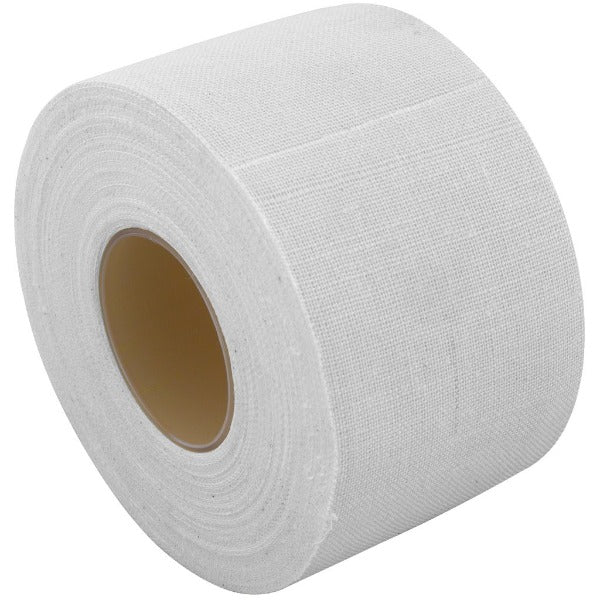
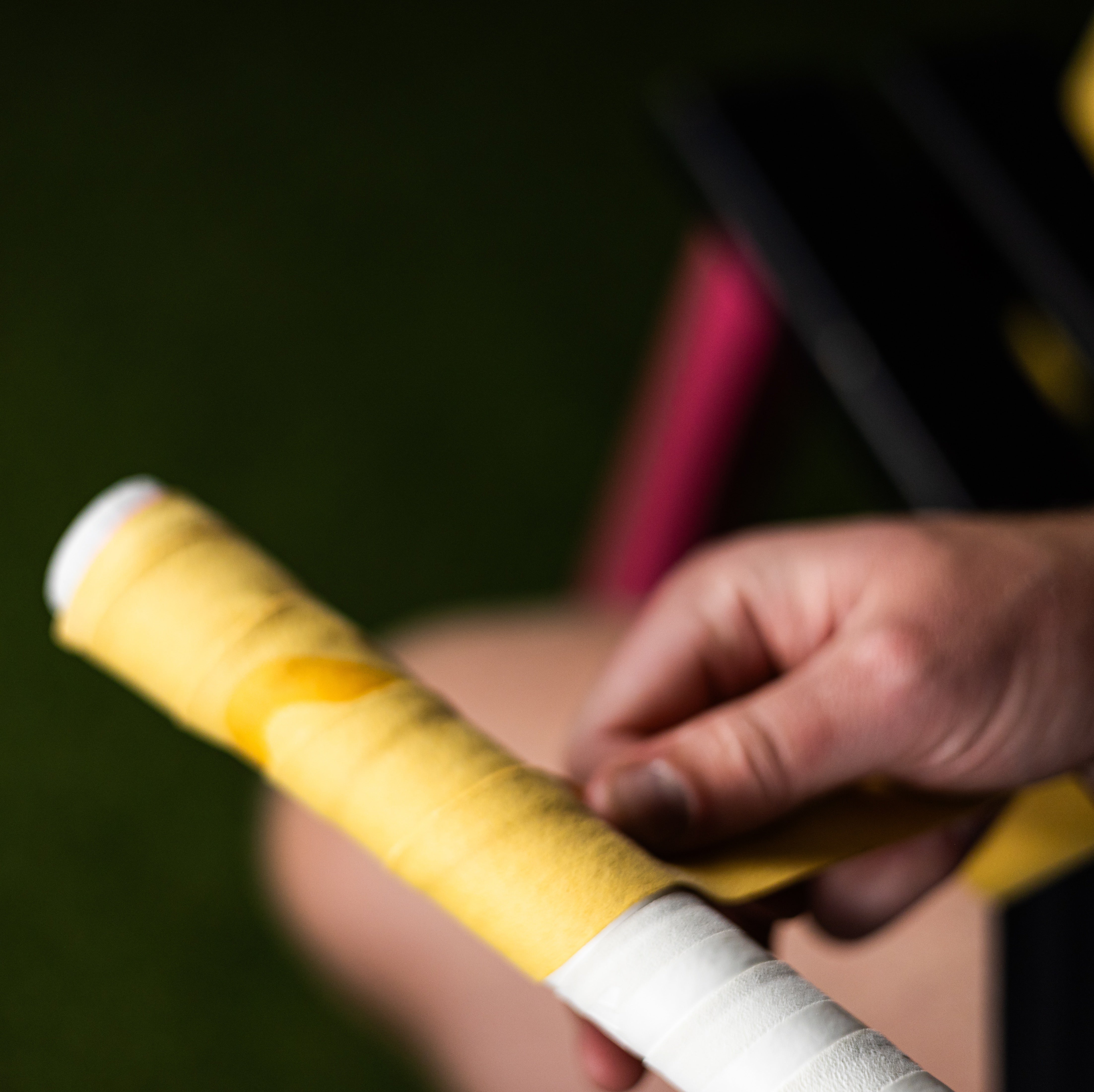
The simplest trick is adding grip tape or an overwrap to the handle. This adds weight up top, raising the balance point and making the stick feel lighter and more handle-heavy. A standard replacement grip adds roughly 15-25g. Double up on grips and you’re looking at 30-50g extra up top, which noticeably shifts the feel.
Going the other way, adding weighted tape to the back of the shaft near the head lowers the balance point, making the stick feel more head-heavy. Some players use lead tape or thick cloth tape around the lower shaft for this. It’s a popular tweak for defenders who want that extra solidity in the tackle without buying a completely different stick.
Just keep in mind that any additions need to stay within the FIH’s stick gauge specifications. And if you’re adding weight, make sure the total stays under 737g (not that you’re likely to get close).
If you’re handy with tape, our guide on how to re-grip a hockey stick walks you through the process step by step.
Common Mistakes When Choosing Hockey Stick Weight
With 385 five-star reviews on Trustpilot and over 60 years of combined hockey knowledge across our team, we’ve fitted a lot of players. And these are the mistakes we see again and again.
Going too light because it’s “the trend”
Lighter isn’t automatically better. Yes, the market has moved toward lighter sticks, and yes, many top players use super light models. But those players also have the technique and wrist strength to generate power from a light stick. If your hitting power drops off a cliff when you go super light, you’ve gone too far.
Ignoring balance point entirely
Two players can buy the same model, same weight, and have completely different experiences — because one got a head-heavy example and the other got a handle-heavy one. Sticks within the same model can vary slightly. Always pick the stick up before you buy if you can.
This is one of the reasons we always recommend visiting a shop rather than buying blind online. When you come into our Durham shop, we’ll let you pick up multiple sticks, feel the balance, and figure out what actually suits your hands.
Copying what your favourite player uses
We get it — your favourite international player uses a 520g super light stick and makes it look effortless. But that player has been playing since they were five, trains every day, and has wrist strength most of us can only dream of. What works at elite level doesn’t always translate to club hockey on a cold Tuesday night in February.
Not accounting for playing surface
This one’s subtle, but it can affect which hockey stick weight works best for you. On a water-based pitch (the fast, wet surfaces used at higher levels), lighter sticks feel even faster because the ball moves more freely. On a sand-based or older astro pitch, you might actually benefit from a bit more weight behind your hits to compensate for the slower surface.
Forgetting about fatigue
If you’re playing a full 70 minutes — or worse, back-to-back matches at a tournament — a stick that felt fine for 20 minutes of practice might feel like a telegraph pole by the final quarter. Think about your typical match situation, not just how the stick feels in a shop.
How to Test Hockey Stick Weight Before You Buy
The best advice we can give? Get the stick in your hands before you commit.
In a shop: Pick up sticks across different weights. Hold them at the top with one hand and swing gently — you’ll feel the difference immediately. Then try some basic stick movements: trapping an imaginary ball, a push pass motion, a hitting swing. Your hands will tell you more than any spec sheet ever could.
Buying online? Check the actual gram weight, not just the category label (remember, one brand’s “light” is another’s “medium”). Read reviews from players in your position. And make sure there’s a decent returns policy — because sometimes you just need to hold the thing.
Here’s a quick test you can do anywhere. Hold the stick at the top of the handle with one hand, arm extended out in front of you. Can you hold it steady for 30 seconds without your wrist shaking? If so, the weight is manageable. If your arm’s trembling after ten seconds, go lighter.
At ONE Sports Warehouse, we stock sticks across every weight category, and our team has over 60 years of combined hockey knowledge between them. Whether you visit our Durham shop or give us a call, we’re happy to talk you through what weight suits your game.
Quick Reference: Hockey Stick Weight by Player Type
Beginner or junior moving to adult sticks — Start with medium (565-590g). It’s forgiving, versatile, and lets you develop your game without being limited by your equipment.
Skilful forward who lives on the ball — Go light or super light (520-560g). You want speed in your hands, and you’ll get your goals from skill and deflections rather than thundering hits.
Box-to-box midfielder — Medium is your friend (565-590g). You do everything, so your stick needs to do everything too.
Solid defender who loves a tackle — Medium to heavy (580-620g), ideally with a lower balance point. You want weight behind your block tackles and clearances.
Drag flicker — This one’s personal. Some flickers want light for the speed of the drag, others want heavy for power through the ball. Try both and see what generates the best results for your technique.
Player coming back from a wrist injury — Go lighter than you normally would while you rebuild strength. You can always move back up once you’re fully fit.
Frequently Asked Questions
How much does a hockey stick weigh?
Most adult field hockey sticks weigh between 520g and 660g. The majority of players use a stick in the 540g to 620g range. The FIH sets a maximum weight of 737g, but modern sticks rarely come close to that limit.
Does hockey stick weight affect performance?
Yes. A lighter stick gives you faster hand speed for skills and dribbling, while a heavier stick provides more power for hits and more stability in tackles. The best hockey stick weight for you depends on your position and playing style.
What hockey stick weight do professional players use?
Most professional players use sticks in the light to super light range (520-560g), though this varies by position. Defenders at the top level often use slightly heavier sticks than forwards. Keep in mind that elite players have the technique and strength to generate power from lighter sticks — what works for them may not be ideal for club-level players.
Is a lighter hockey stick better?
Not necessarily. Lighter sticks are faster to move but sacrifice power and tackling strength. A stick that’s too light for your playing style can actually hurt your game. Medium weight (565-590g) is the most versatile option for players who aren’t sure what they need.
So, What Weight Should You Actually Get?
Honestly? The one that feels right when you pick it up.
That sounds like a cop-out, but it’s genuinely the best advice we can give. Hockey stick weight isn’t about finding a magic number — it’s about matching your position, your playing style, and what your hands tell you. A 540g stick that feels perfect for your mate might feel like a twig to you. Completely normal.
Stop chasing the lightest stick on the market. Stop copying what the pros use. And whatever you do, don’t ignore balance point — it matters just as much as total weight. Sometimes more.
And if you’re still not sure, we’re here to help. Our team at ONE Sports Warehouse has been fitting hockey players with the right kit for years — it’s genuinely what we love doing. Pop into the Durham shop, give us a ring, or browse our full range of hockey sticks online.