





What Are Hockey Sticks Made From?
When choosing a field hockey stick, the material it’s made from plays a huge role in how it feels, performs, and suits your level of play.
Modern field hockey sticks have evolved far beyond traditional wooden designs, now using advanced composite materials to enhance power, control, and durability. In this guide, we’ll explain what field hockey sticks are made of, how each material affects performance, and which option is best for you.
Wooden Field Hockey Sticks

Wooden field hockey sticks were the original design and are still widely used today, especially at junior and entry level. Most wooden sticks are made using mulberry wood, known for its strength and durability.
Benefits of Wooden Sticks
Excellent control and touch
-
Very durable
-
Affordable
-
Ideal for learning core skills
Drawbacks
-
Heavier than composite sticks
-
Less power
-
Not designed for advanced skills
Our recommendations:
View our Junior Field Hockey Sticks here
Fibreglass Field Hockey Sticks

Fibreglass field hockey sticks usually feature a wooden core reinforced with fibreglass layers, offering a noticeable step up in performance while still maintaining forgiveness.
Why Players Choose Fibreglass
-
More stiffness than wood
-
Improved durability
-
Better power transfer
-
Forgiving feel on the ball
Fibreglass sticks are ideal for players progressing into regular club hockey.
Best for: Developing and intermediate players
Our recommendations for fibreglass sticks:
Osaka Elite Tour Low Bow Advanced 70 Raspberry Hockey Stick SS26
Adidas Estro .5 Bright Royal Hockey Stick 25/26
Carbon Fibre Field Hockey Sticks

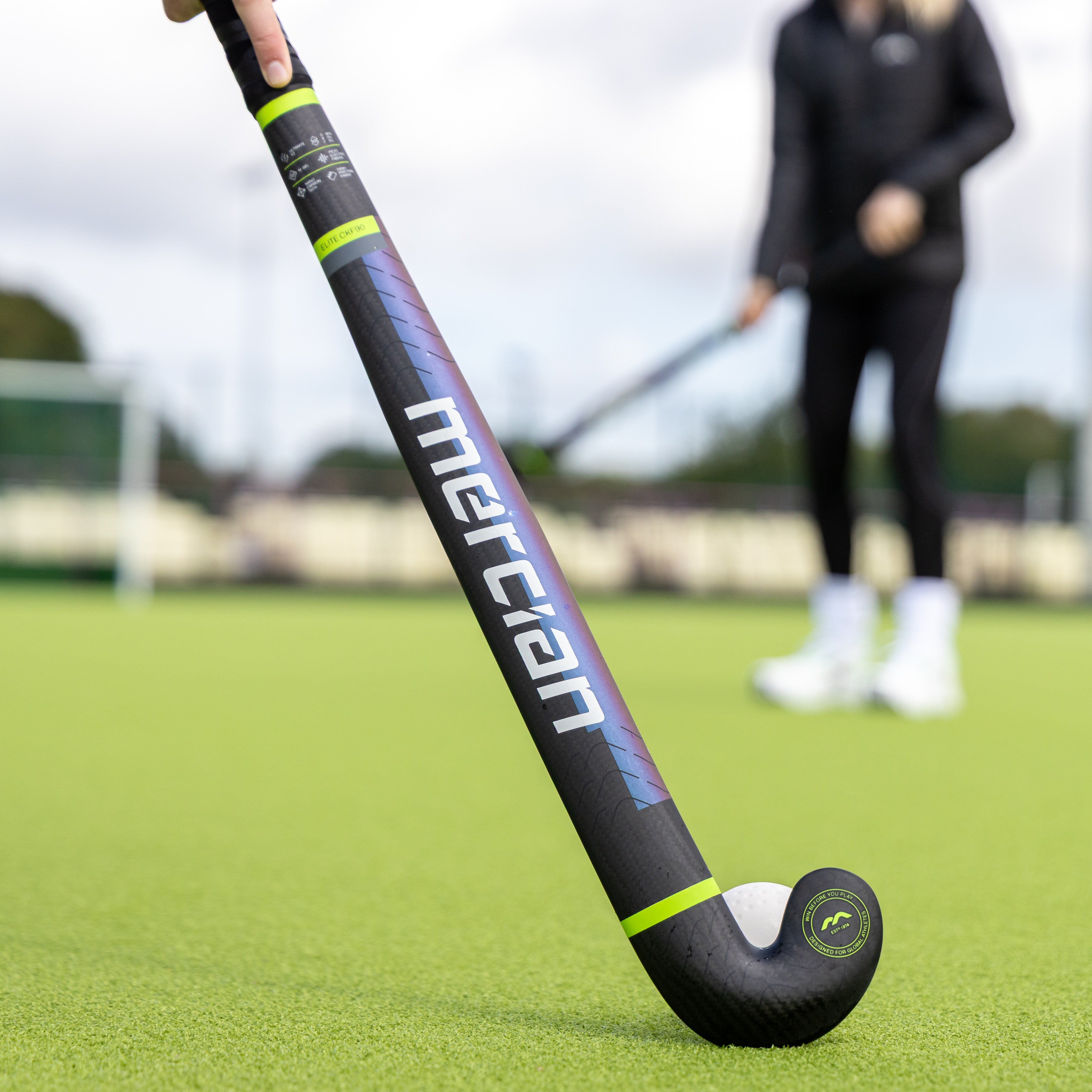
Carbon fibre is a key material in modern performance field hockey sticks. Increasing the carbon percentage increases stiffness and power, but reduces forgiveness.
Most sticks display their carbon content clearly, making it easier to match a stick to your ability.
Benefits of Carbon Fibre
-
More powerful hitting and slapping
-
Faster ball speed
-
Lightweight feel
-
Excellent energy return
Things to Consider
-
Higher carbon = less control
-
Requires good technique
-
Not ideal for beginners
Lower carbon: more control
Higher carbon: more power
Our recommendations for high carbon sticks:
Nike Pursuit Elite Hockey Stick
Composite Field Hockey Sticks

Almost all modern field hockey sticks are composite sticks, combining multiple materials to fine-tune performance.
Typical composite construction includes:
-
Carbon fibre – power & stiffness
-
Fibreglass – durability
-
Kevlar / aramid – feel & vibration reduction
-
Resin systems – consistency and strength
Why Composite Sticks Dominate the Game
-
Lightweight
-
Consistent feel
-
Designed for aerials and 3D skills
-
Tailored to different playing styles
How Stick Materials Affect Performance
Which Field Hockey Stick Material Is Right for You?
-
Beginners & Juniors: Wooden or low-carbon composite
-
Club Players: Fibreglass or 30–50% carbon
-
Advanced Players: Mid-to-high carbon with Kevlar
-
Elite Players: 70–95% carbon for maximum power
If you’re unsure, our team is always happy to help you choose the right stick.
Best questions to ask yourself to help you pick your next hockey stick:
-
What type of player are you? How often to do you hit/slap the ball? This will help you decide how much carbon you may need.
-
What is your budget? The higher the carbon the more expensive sticks tend to be!
-
What bow profile will you need? There are multiple bow profiles for every brand of hockey stick now, so this is really important for you to get right. Whether you like to play with a really low bow or whether you prefer a mid-bow stick, there have never been more options for players.
And of course the best way for you to be absolutely 100% sure is to physically try different wooden, fibreglass and carbon sticks out… this is where our 200 square metre hitting area gives you all the room you need to try out our full range of sticks.
For more advice you can use the live chat function on our website or view our helpful guides on hockey sticks.